Publications

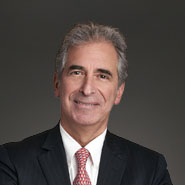
David B. Fein: Connecticut’s 50th U.S. Attorney
Congress enacted the Judiciary Act of 1789, directing then-President George Washington to appoint in each federal district a”person learned in the law to act as an attorney for the United States.” This person was “to prosecute in each district all delinquents for crimes and offenses cognizable under the authority of the United States, and all civil actions in which the United States shall be concerned.” President Washington thereafter appointed 13 distinguished men to fill the newly created post of “United States Attorney,” one in each of the original 13 federal judicial districts. It is said that the very first appointment President Washington made was that of Pierrepont Edwards as Connecticut’s first United States Attorney. Fast forward 221 years. On May 10, 2010, President Barack Obama appointed David B. Fein Connecticut’s 50th United States Attorney.
On the morning of this Winter’s fourth snow storm, I met with U.S. Attorney Fein for breakfast at one of Connecticut’s venerable institutions — the Sherwood Diner — for purposes of this article. I have known David Fein for many years; we were on opposite sides of the “v.” on cases when I was a federal prosecutor, and later we were partners in the white collar defense and corporate compliance practice group at Wiggin and Dana. Although we have known one another for many years, I learned new facts about Connecticut’s U.S. Attorney, some of which I now share.
As a preface, I find it awkward to refer to my former partner as “Mr. Fein,” so I will refer to him using his first name without intending to compromise the respect due him and the office he occupies.
Background and Education
David grew up in Waccabuc, New York. Waccabuc? Yes, Waccabuc. I looked it up and found that it is invariably described as a “hamlet” in Westchester County adjacent to the Connecticut border. David attended John Jay High School where, in addition to excelling academically, he played varsity tennis. David attended Dartmouth College, majored in English and was active in student government. David’s interest in government service was kindled by a Dartmouth trimester term spent in Washington as an intern for the legendary Senator Daniel Patrick Moynihan.
For as long he can remember, David has had an abiding interest in criminal law. Among other things, it was that interest that motivated David to go to New York University Law School. At NYU, David was most inspired by a professor who taught a course on the lawyering process, Anthony G. Amsterdam. For those who are not familiar with Professor Amsterdam, he is perhaps most well known for his winning argument before the U.S. Supreme Court in Furman v. Georgia, the case that struck down all death penalty statutes then in effect.
While at NYU, David was senior notes editor of the law review and he and the editor-in-chief, Roy McLeese, formed an important and enduring friendship. Roy McLeese has been the long time appellate chief of the U.S. Attorney’s Office in the District of Columbia and has served as Acting Deputy Solicitor General of the U.S. David thinks of and refers to Roy McLeese as one of his closest friends and as a role model and inspiration in the law.
Professional Career
Another of David’s role models in the law is the judge for whom he clerked: the late Judge Frank M. Coffin of the First Circuit. Judge Coffin’s chambers were in Portland, Maine, and David remembers his time with the judge as invaluable in shaping him as a lawyer. David described Judge Coffin as a “meticulous thinker who was wholly dedicated to getting it right; he had no agenda other than fidelity to the law and scrupulous attention to the record — he got into the weeds of each case.” David also remembers Judge Coffin for his decency, integrity and courtesy to all. The judge’s devotion to his wife and family also left a lasting impression on David.
While on the topic of family, David is married to Elizabeth Oestreich, also an accomplished lawyer and now a teacher and librarian at the Stanwich School in Greenwich. David and Elizabeth have two children, Katie, a freshman at Yale, and William, a sophomore in high school. Like the judge for whom he clerked, David is devoted to his family. His career path following his clerkship was shaped, in part, by that commitment.
Although David was interested in applying to the U.S. Attorney’s office directly from his clerkship, he recalls Judge Coffin counseling him to spend a few years at a law firm learning how to become a lawyer first. David followed the judge’s advice and associated with Debevoise & Plimpton. There, David worked very closely and almost exclusively with Mary Jo White. David regards her as another important mentor and role model in the law. After more than two years at Debevoise, David applied to and was offered a position as an Assistant U.S. Attorney in the Southern District of New York.
David served as an AUSA for six years under U.S. Attorneys Giuliani, Romano, Obermaier and White. David started in general crimes and then moved to the narcotics unit, where he ultimately served as Deputy Chief. David was later elevated to Deputy Chief of the Criminal Division and, when Mary Jo White became U.S. Attorney, David became her “counsel.” David investigated and prosecuted many different crimes but his favorite, hands down, was the investigation and prosecution of historical narcotics conspiracies. David remarked that he most enjoyed the interaction with law enforcement officers and helping to shape investigations.
I asked David about the most important and/or memorable case he prosecuted. He did not hesitate in responding: the prosecution of Michael Dowd. Dowd was a rogue New York City cop who led other law enforcement officers in accepting protection money from drug organizations and in engaging in a variety of criminal conduct. Dowd ultimately cooperated with what came to be known as the Mollen Commission. That prosecution and Dowd’s subsequent cooperation with the Mollen Commission led to many important reforms within New York’s police department.
David left the U.S. Attorney’s Office after approximately six years to serve in President Clinton’s White House Counsel’s Office. While there, David worked on the criminal justice portfolio. David recalled that one of the most interesting and challenging matters he was called upon to address was moving to quash a subpoena issued to the President for his testimony in connection with the Whitewater-related McDougal prosecution. David also remarked that, looking back, it was fortuitous that his growing family and desire to return to the stability of friends and family in Old Greenwich, Connecticut, caused him to decide to leave the White House Counsel’s Office in favor of private practice just two weeks before the Monica Lewinsky scandal erupted.
I asked David why, given the connections he had made in New York at Debevoise and at the U.S. Attorney’s Office in the Southern District, he decided to join Wiggin and Dana which, at the time, was predominantly a Connecticut firm. David explained that after meeting partners at Wiggin and Dana, he recognized that he could practice at the very highest levels without compromising his commitment to his family. “I recognized that partners at Wiggin and Dana were at the pinnacle of the lawyering craft. Mark Kravitz [now Judge Kravitz] in particular impressed me with his ability to reach the elusive balance of dedication to work and family without compromising either.” David also recounted that Wiggin and Dana gave him the ideal platform to develop a successful white collar practice. In that regard, he commented that he was fortunate to have wonderful mentors at the firm but also friends outside the firm including Denis McInerney at Davis Polk (now chief of the Frauds Section at DOJ) and Mark Stein at Simpson Thatcher and others, who were generous with their time and counsel in addressing issues unique to criminal defense work.
I asked David about his most rewarding experience in the decade he was a partner in private practice. He did not hesitate in responding that it was the defense of John Kramer, former vice president of CVS, at trial in federal court in Providence, Rhode Island, on corruption charges. Following a three week trial, the jury was out just 90 minutes before it returned across-the-board verdicts of not guilty on each of 20 counts charging bribery, mail fraud and conspiracy. The prosecution was conducted by the Public Integrity Section of DOJ together with the Rhode Island U.S. Attorney’s Office. David remarked that it was rewarding for him to put everything into the defense of a case that he did not think the facts supported in the first instance and to achieve a just result.
Decision to Pursue the Position of U.S. Attorney
During his tenure at Wiggin and Dana, David helped build a successful white collar defense practice. I put what seemed to be the obvious question to David: What inspired you to seek the U.S. Attorney’s job after building a thriving practice? David responded that he had been teaching a course at Yale Law School for ten years with Kate Stith (also a former AUSA in the Southern District and the wife of Second Circuit Judge José Cabranes) titled “Federal Criminal Prosecution.” “Each time I left the classroom after teaching that course I was reminded of just how much I loved and missed being a federal prosecutor. The election of President Obama presented an opportunity for me to return to the government service that Senator Moynihan and Judge Coffin taught me was so vitally important and also to return to a job that I loved, albeit in a different capacity.”
Since David’s swearing-in as Connecticut’s U.S. Attorney, he has made structural changes to the office. Although Connecticut is one district, it has had three offices — Hartford, New Haven and Bridgeport. Each office was headed by a branch chief who reported to the criminal chief who in turn reported to the Deputy U.S. Attorney and the U.S. Attorney. After spending time learning about the office and meeting each AUSA individually, David changed the structure of the criminal division from a geographic based structure to a program-based structure; there are now three units: National Security and Major Crimes; Violent Crimes and Narcotics; and Financial Fraud and Public Corruption. In addition to making programmatic changes, David has altered the supervisory line-up of the office in a fashion he believes will allow individual prosecutors to be more productive and successful.
David indicated that in addition to national priorities, a high priority for the U.S. Attorney’s Office under his administration will be rooting out securities fraud and investor fraud, particularly in the hedge-fund rich Fairfield County corridor. A press release issued by the U.S. Attorney’s Office not long ago heralds the formation of a task force comprised of federal and state agencies including the FBI, the U.S. Secret Service, the Postal Inspections Service, the SEC, CFTC, IRS, State Banking Department, local police departments and others to investigate securities and investor fraud. The new U.S. Attorney said that “significant resources are being devoted to the investigation and prosecution of these crimes.” David said that civil rights violations, child exploitation and violent crime are also local priorities of the Office.
I inquired whether David’s experience as both a prosecutor and a defense attorney has informed his role as the chief law enforcement officer in Connecticut. David opined that his experience as a prosecutor has helped him immeasurably. “I understand the issues and the challenges that prosecutors face and am able to lend the benefit of my experience in individual cases in tangible ways. Having been in the trenches is a real advantage.”
David believes that his experience as a defense attorney is also important to his role as U.S. Attorney. “I understand firsthand the impact a criminal investigation and prosecution can have on individuals and corporations.” For that reason, David has insisted that investigations not languish. He is urging AUSAs in the Connecticut office to approach each case with both a sense of urgency and a sense of economy. When asked to explain what he means by a “sense of economy,” David explained that investigative plans can be tailored and subpoenas can be carefully drawn to maximize the production of relevant evidence and to minimize the cost and expense of compliance.
I asked David about differences he has observed between the Connecticut U.S. Attorney’s Office and his former office. Without offering details, he noted that he has observed differences but the most remarkable difference is that law enforcement agencies in Connecticut seem to get along. “There are far fewer parochial interests and turf battles that get in the way of getting the job done.” David remarked that federal agencies and state and local law enforcement authorities actually work together collaboratively. David noted that with such cooperation, he is optimistic that much can be accomplished during his tenure as U.S. Attorney.
In short, following the admonition of the Judiciary Act of 1789, President Obama has appointed a person learned in the law to act as an attorney for the U.S. in the District of Connecticut.