Publications

Connecticut PFAS Restrictions Now in Effect
As of July 1, 2026, Connecticut’s per- and polyfluoroalkyl substances (“PFAS”) laws have moved from a future deadline to an enforceable requirement. Companies that sell in the Nutmeg State, and consumers who shop there, are now subject to the first phase of one of the country’s most far-reaching “forever chemical” regimes.
Key Takeaways
- Notification and labeling are now mandatory. Since July 1, 2026, manufacturers of covered products containing intentionally added PFAS must report those products to DEEP (with an $800 fee) and label them as containing PFAS. Unreported products may not be sold in Connecticut, including online.
- No extensions. DEEP has indicated it will not grant extensions, so businesses that have not yet evaluated products, filed notifications, or applied compliant labels should act immediately.
- A full ban begins January 1, 2028. The Act will prohibit the manufacture and sale of covered products, as well as turnout gear and outdoor apparel for severe wet conditions, that contain intentionally added PFAS. Reformulation and supplier changes should begin now.
- DEEP may demand proof of compliance. On written request, manufacturers and suppliers must provide a Certificate of Compliance and relevant supporting information.
- Review the exemptions. Products governed by preemptive federal law, used products, FDA-regulated medical products, products with at least 85% recycled content, and certain others fall outside the Act.
The Law in Brief
Signed into law over two years ago, An Act Concerning the Use of PFAS in Certain Products (“the Act”), codified at C.G.S. § 22a‑903c, requires manufacturers of certain consumer products containing “intentionally added PFAS” to (1) notify the Connecticut Department of Energy and Environmental Protection (“DEEP”) of those products and specified product information; and (2) label those products so that consumers can readily identify the presence of PFAS.
Beginning January 1, 2028, the Act goes further and prohibits the manufacture and sale of these products altogether.
Disclosure
Manufacturers of the products below must submit to DEEP a PFAS Reporting Form and the accompanying fee ($800). The requirement applies to products sold or offered for sale in Connecticut, including via online sales.
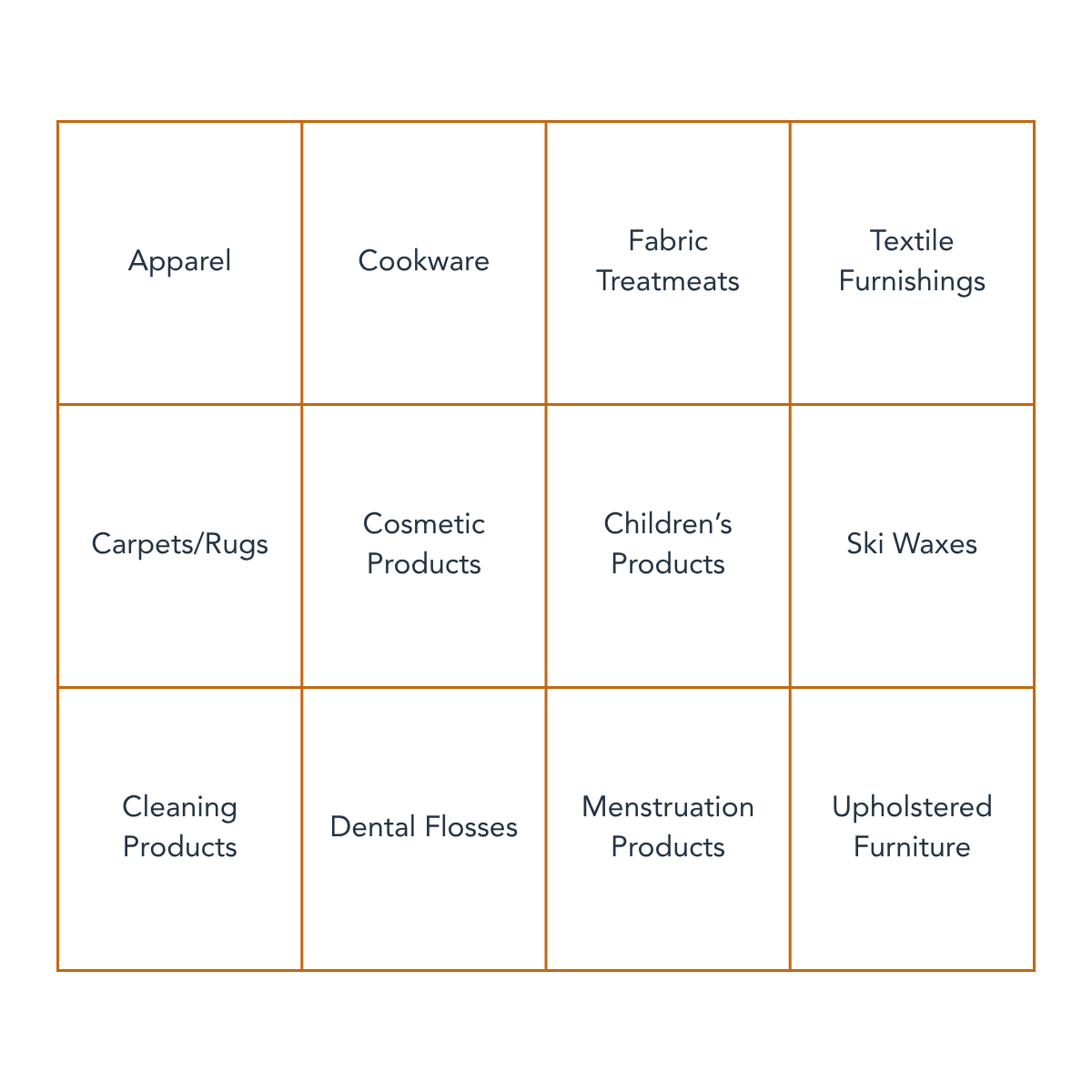
The PFAS Reporting Form is detailed and may call for trade secrets, proprietary information, or other confidential business information. Among other things, manufacturers must provide:
- A brief description of the product;
- The function or purpose of PFAS in the product (e., non-stick, grease, or water resistance); and
- The Chemical Abstracts Service Registry Number(s) (“CASRNs”), or the molecular formulas and weights, of the specific PFAS.
Labeling
Covered products containing intentionally added PFAS must be sold with a “clearly visible” label that informs the purchaser that PFAS is present in the product. DEEP has approved the following wording:
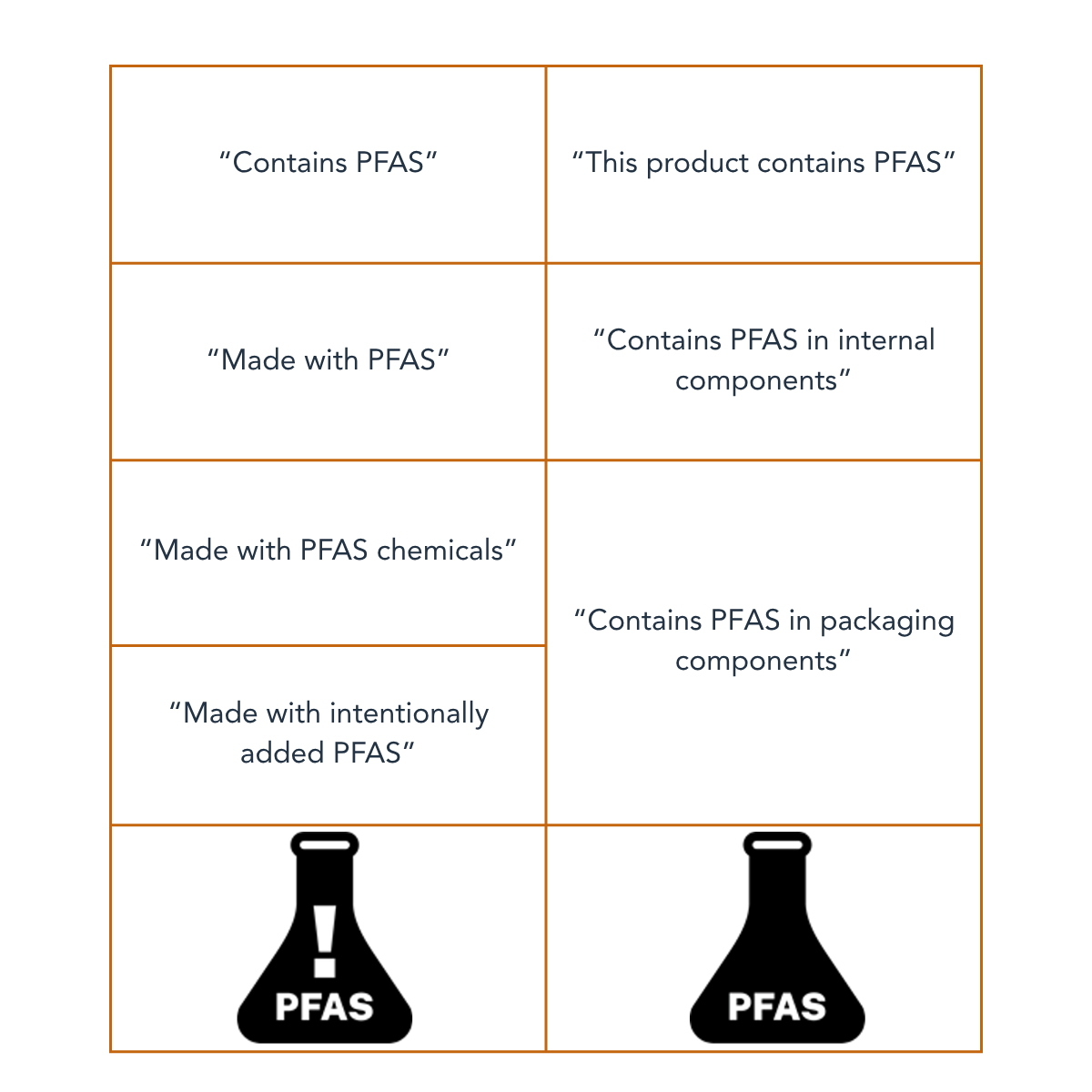
Manufacturers and sellers that prefer different wording or symbols may petition DEEP for approval.
Ban
On and after January 1, 2028, the Act prohibits the manufacture or sale of the aforementioned products, as well as turnout gear (e.g., protective clothing worn by firefighters and emergency medical services personnel) and outdoor apparel for severe wet conditions, should they contain intentionally added PFAS.
Certification of Compliance
Upon DEEP’s written request, a product’s manufacturer or supplier must give DEEP a “Certificate of Compliance” stating that a product complies with the provisions of the Act. The request may also require the disclosure of “any information that the person may have or may reasonably obtain that is relevant to show compliance” with the Act.
Notable Exemptions
The Act contains numerous exemptions from its disclosure, labeling, and prohibition requirements, including:
- Any product for which federal law governs or requires the presence of PFAS in the product in a manner that preempts state authority;
- Any product regulated under Connecticut’s Class B firefighting foam laws or certain packaging laws;
- The sale or resale of a used product;
- Any prosthetic or orthotic device or any product that is a medical device or drug or that is otherwise used in a medical setting or in medical applications regulated by the United States Food and Drug Administration;
- Any product made with not less than 85% recycled content;
- Any product manufactured prior to any prohibition imposed by the Act; and
- Replacement parts for any product manufactured prior to any prohibition imposed by the Act.
Conclusion
The notification and labeling requirements are now in force, and a covered product that is not properly reported to DEEP may not be sold in Connecticut. Businesses should confirm that each covered product has been evaluated, that required notifications have been filed, and that labels appear where purchasers will see them. DEEP has indicated that it will not grant extensions.
July 2026 was only the first step. The January 1, 2028, prohibition will require many companies to reformulate products or change suppliers. That work takes time, and businesses should begin identifying PFAS in their products and supply chains now. They should also coordinate with other states’ programs, including New Mexico’s labeling requirement, which takes effect in January 2027.
Wiggin and Dana attorneys have extensive experience with PFAS-in-products laws and can help you navigate this complex process. For more information, please contact David Speranzini and Zachary Lee.